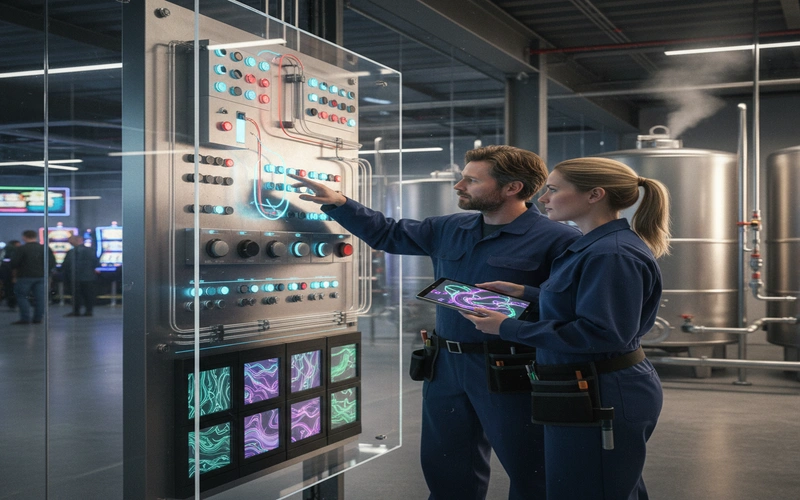
Hot Water Redundancy Plans for Casino Kitchens and Bars
Casinos, entertainment venues, and hospitality businesses in Glasgow cannot afford hot water failures during peak service periods when kitchens, bars, and customer facilities operate at maximum capacity. Resilient hot water systems incorporate redundant equipment, priority controls, and backup capacity ensuring continuous supply even when primary equipment requires maintenance or experiences unexpected faults. Professional system design by experienced heating engineers creates robust infrastructure that maintains service quality, protects revenue, and meets health and safety requirements for food preparation and customer facilities throughout evening and weekend peak trading periods.
Redundancy Strategies for Commercial Hot Water
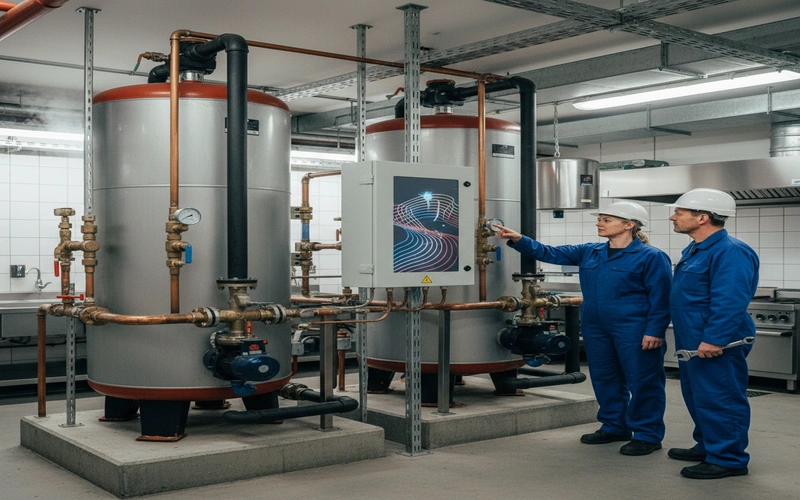
Effective hot water redundancy involves multiple approaches beyond simply installing duplicate equipment. Twin cylinder configurations with independent heating circuits ensure one unit continues supplying hot water while the other undergoes maintenance. Plate heat exchangers provide instantaneous backup capacity when storage cylinders deplete during unexpected demand spikes. Priority logic automatically allocates heating capacity to critical areas like commercial kitchens during peak service while maintaining adequate supply to bars and customer facilities. Buffer vessels smooth demand fluctuations preventing frequent boiler cycling that wastes energy and accelerates wear.
- Dual cylinder systems with isolation valves enable servicing without interrupting hot water supply to operations
- Plate heat exchangers provide instant backup heating when stored hot water depletes during peak periods
- Priority controls ensure commercial kitchens receive adequate hot water supply during critical service times
- Commercial-grade unvented cylinders handle high flow rates required for multiple simultaneous draw-offs
- Temperature monitoring alerts management to performance issues before complete system failures occur
System Configuration Comparison
Different redundancy approaches suit various venue types and operational requirements:
| Configuration | Best Application | Reliability Level |
|---|---|---|
| Twin Cylinders | Consistent moderate demand | High redundancy |
| Cylinder + Plate HX | Variable demand patterns | Maximum flexibility |
| Multiple Small Units | Distributed locations | Partial redundancy |
| Large Single + Backup | Centralized high volume | Standard redundancy |
"Hot water redundancy isn't excessive for venues where service interruption directly impacts revenue—twin cylinder systems and backup heating ensure business continuity during both planned maintenance and unexpected equipment failures."
Design and Installation Considerations
Implementing hot water redundancy requires careful planning addressing peak demand calculations, space constraints, and integration with existing mechanical systems. Gas Safe registered commercial heating engineers assess actual usage patterns rather than relying on generic design guides, ensuring installed capacity matches real operational requirements. Proper system sizing prevents inadequate supply during busy periods while avoiding oversized equipment that wastes energy during quieter times. Installation must comply with commercial building regulations including G3 unvented hot water requirements, legionella control measures, and adequate safety devices. Comprehensive commissioning verifies redundant systems function correctly with automatic changeover controls tested under realistic load conditions before handover to venue management.